


报告题目:Recent Developments of Carbon Dot Luminophores
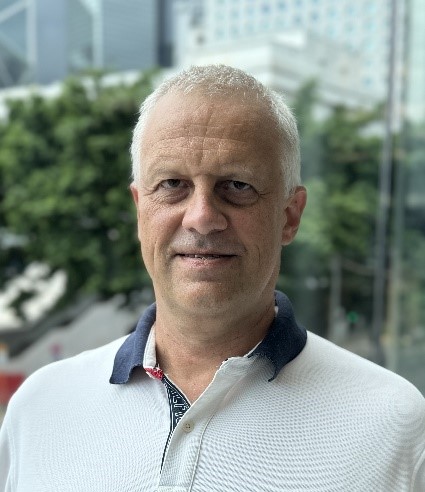
报告人:Andrey L. Rogach教授
报告时间:2026年5月14日(周四)10:00
报告地点:青岛科技大学四方校区CCE楼1505
报告人简介:
Andrey L. Rogach is a Yeung Kin Man Chair Professor in Photonics Materials at the Department of Materials Science and Engineering, and the Founding Director of the Centre for Functional Photonics (CFP) at City University of Hong Kong. He received his Diploma in Chemistry (1991, with honors) and Ph.D. in Physical Chemistry (1995) from the Belarusian State University in Minsk, and worked as a postdoc and then as a staff scientist at the Institute of Physical Chemistry of the University of Hamburg, Germany from 1995 to 2002. From 2002–2009 he held a tenured position of a lead staff scientist at the Department of Physics of the University of Munich, Germany. He joined City University of Hong Kong as a Full Professor in 2009 and has been advanced to Chair Professor in 2012. His research focuses on synthesis, assembly and optical spectroscopy of colloidal semiconductor and metal nanocrystals and their hybrid structures, and their use for energy-related, optoelectronic and biological applications. He authored over 600 scientific publications with an h-index of 158 {Google Scholar} in these fields that have been extensively (over 88,000) cited, which ranked him as Highly Cited Researcher (Clarivate Analytics) in Cross-Field or Materials Science every year since 2018. Andrey Rogach is a Foreign Member of the Academia Europaea, and a Fellow of the Electromagnetic Academy, USA. He served as an Associate Editor of ACS Nano in 2011-2023.
报告简介:
Carbon dots (CDs) – small crystalline or amorphous carbon-based quasi-spherical nanoparticles – have attracted much attention as promising fluorescent materials [1]. One of their widely accepted advantages is the simplicity of the formation of highly luminescent CDs from a wide variety of organic precursors. At the same time, several studies on these chemically synthesized CDs raised questions about the chemical nature of the resulting products; their strong luminescence can originate from the presence of molecular organic fluorophores [2]. Theoretical modelling shows that photoexcited species localize on solvent-accessible fluorophore rich domains located inside carbon dots [3]. On the other hand, proper synthetic procedures yield purely carbon dot samples of different sizes; color-tunable fluorescence of CDs with blue, green, yellow, orange, red [4] and even near-infrared emission [5] can be achieved. Proper surface functionalization can render carbon dots hydrophilic or amphiphilic, and thus easily dispersible in a wide range of solvents [6]. We have recently demonstrated CDs with a chiral emission which experience specific interactions with biological entities [7]. Application of CDs are plenty and range from light-emitting devices [6,8] to pH sensors [9] and – if doped with Gadolinium – dual-mode red-emitting MRI contrast agents [10].
1. G. Ragazzon, A. Cadranel, E. V. Ushakova, Y. Wang, D. M. Guldi, A. L. Rogach, N. A. Kotov, M. Prato. Optical Processes in Carbon Nanocolloids. Chem. 2021, 7, 606.
2. Y. Xiong, J. Schneider, E. V. Ushakova, A. L. Rogach. Influence of Molecular Fluorophores on the Research Field of Chemically Synthesized Carbon Dots. NanoToday 2018, 23, 124.
3. M. Langer, L. Zdražil, A. L. Rogach, S. Osella, M. Otyepka. Photoexcited Species Localize on Solvent-Accessible Fluorophore Rich Domains inside Carbon Dots. Carbon 2026, 249, 121228.
4. Z. Tian, D. Li, X. Zhang, D. Zhou, P. Jing, D. Shen, S. Qu, R. Zboril, A. L. Rogach. Full-Color Inorganic Carbon Dot Phosphors for White Light Emitting Diodes. Adv. Opt. Mater. 2017, 5, 1700416.
5. D. Li, P. Jing, L. Sun, Y. An, X. Shan, X. Lu, D. Zhou, D. Han, D. Shen, Y. Zhai, S. Qu, R. Zboril, A. L. Rogach. Near-Infrared Excitation/Emission and Multiphoton-Induced Fluorescence of Carbon Dots. Adv. Mater. 2018, 1705913.
6. S. A. Cherevkov, E. A. Stepanidenko, M. D. Miruschenko, A. M. Zverkov, A. M. Mitroshin, I. V. Margaryan, I. G. Spiridonov, D. V. Danilov, A. V. Koroleva, E. V. Zhizhin, M. V. Baidakova, R. V. Sokolov, M. A. Sandzhieva, E. V. Ushakova, A. L. Rogach. Amphiphilic Acetylacetone-Based Carbon Dots. J. Mater. Chem. C, 2024, 12, 3943-3952.
7. A. M. Mitroshin, E. A. Stepanidenko, A. A. Vedernikova, I. A. Arefina, S. A. Cherevkov, E. V. Kundelev, M. D. Miruschenko, A. V. Koroleva, E. V. Zhizhin, A. V. Sokolova, S. A. Miltsov, A. V. Yakimansky, M. Langer, L. Zdražil, M. Otyepka, Y. Liang, S. Qu, E. V. Ushakova, A. L. Rogach. Preparation of Chiral Red-Emitting Carbon Dots by Isocyanates Post-Synthetic Treatment with Specific Interaction with Bio-Objects. Microchim. Acta, 2025, 192, 854.
8. M. D. Miruschenko, K. D. Kosolapova, I. A. Aleinik, L. N. Borodina, A. A. Vedernikova, A. V. Sokolova, M. A. Sandzhieva, A. M. Mitroshin, A. V. Yakimansky, A. V. Koroleva, E. V. Zhizhin, S. A. Cherevkov, M. Langer, M. Otyepka, E. V. Ushakova, A. L. Rogach. Functionalization of Hydrophilic and Amphiphilic Carbon Dots with Polyethylene Glycol for Electroluminescent Devices. Small Struct. 2025, 6, 2400528.
9. S. Kalytchuk, T. Malina, F. Mravec, K. Poláková, L. Zdražil, S. Kment, A. L. Rogach, M. Otyepka, R. Zbořil. pH Sensing and Imaging in Living Cells based on Fluorescence Lifetime of Carbon Dot Nanosensors. Biosensors & Bioelectronics 2026, 291, 118022.
10. A. A. Efimova, Z. F. Badrieva, E. A. Brui, M. D. Miruschenko, I. A. Aleinik, A. M. Mitroshin, O. V. Volina, A. V. Koroleva, E. V. Zhizhin, Y. Liang, S. Qu, E. V. Ushakova, E. A. Stepanidenko, A. L. Rogach. Effect of Gadolinium Doping on the Optical and Magnetic Properties of Red-Emitting Dual-Mode Carbon Dot-Based Probes for Magnetic Resonance Imaging. ACS Appl. Bio Mater. 2025, 8, 1493-1502.